Bambu Lab's new X2D dual-nozzle printer handles multi-color prints, soluble supports, and high-temp materials in a home-friendly package.
Dual Nozzles, One Printer
Bambu Lab's X2D addresses a frustration that anyone who has attempted a multi-color or multi-material print knows well. Switching filaments mid-job through a single nozzle takes time. It wastes material. And if the purge isn't perfect, the final object carries a visible scar where the color change happened. The X2D sidesteps this with two nozzles working in tandem.
One nozzle can handle the primary material while the other loads a different color or a dedicated support filament. The printer assigns tasks to each head independently. The result is faster multi-color output and cleaner support removal. After a print finishes, supports peel away more cleanly, leaving better surface quality on overhangs and delicate details.
Build Environment and Temperature Range
The X2D runs an actively heated chamber that reaches up to 65 degrees Celsius. The heated chamber stabilizes temperatures around the model while a print is running, which matters more than most people realize. Cooling drafts cause layer adhesion problems and warping, especially on larger parts. Keeping the entire build space warm changes the success rate for materials beyond standard PLA.
Nozzle temperatures climb to 300 degrees Celsius. That opens the door to ABS, polycarbonate, nylon, and other engineering-grade filaments that need higher extrusion temperatures. Combined with the heated chamber, the X2D can handle functional parts instead of just decorative trinkets. Organizers, brackets, enclosures, and replacement components become realistic projects.
Extrusion and Filament Monitoring
Bambu Lab uses a closed-loop servo motor extruder on the X2D. Servo control lets the printer adjust extrusion force on the fly rather than relying on fixed stepper steps. In practice, this means more consistent layer deposition and fewer failed prints caused by under- or over-extrusion.
The system also includes AI-driven filament monitoring along the entire feed path. Filament jams, tangles, and feeding resistance don't always happen at the nozzle. By watching the whole filament route, the X2D can stop a job before a single wasted layer ruins a six-hour print. For users who don't want to stare at their printer every minute, that safety net is useful.
Build Volume and AMS Expansion
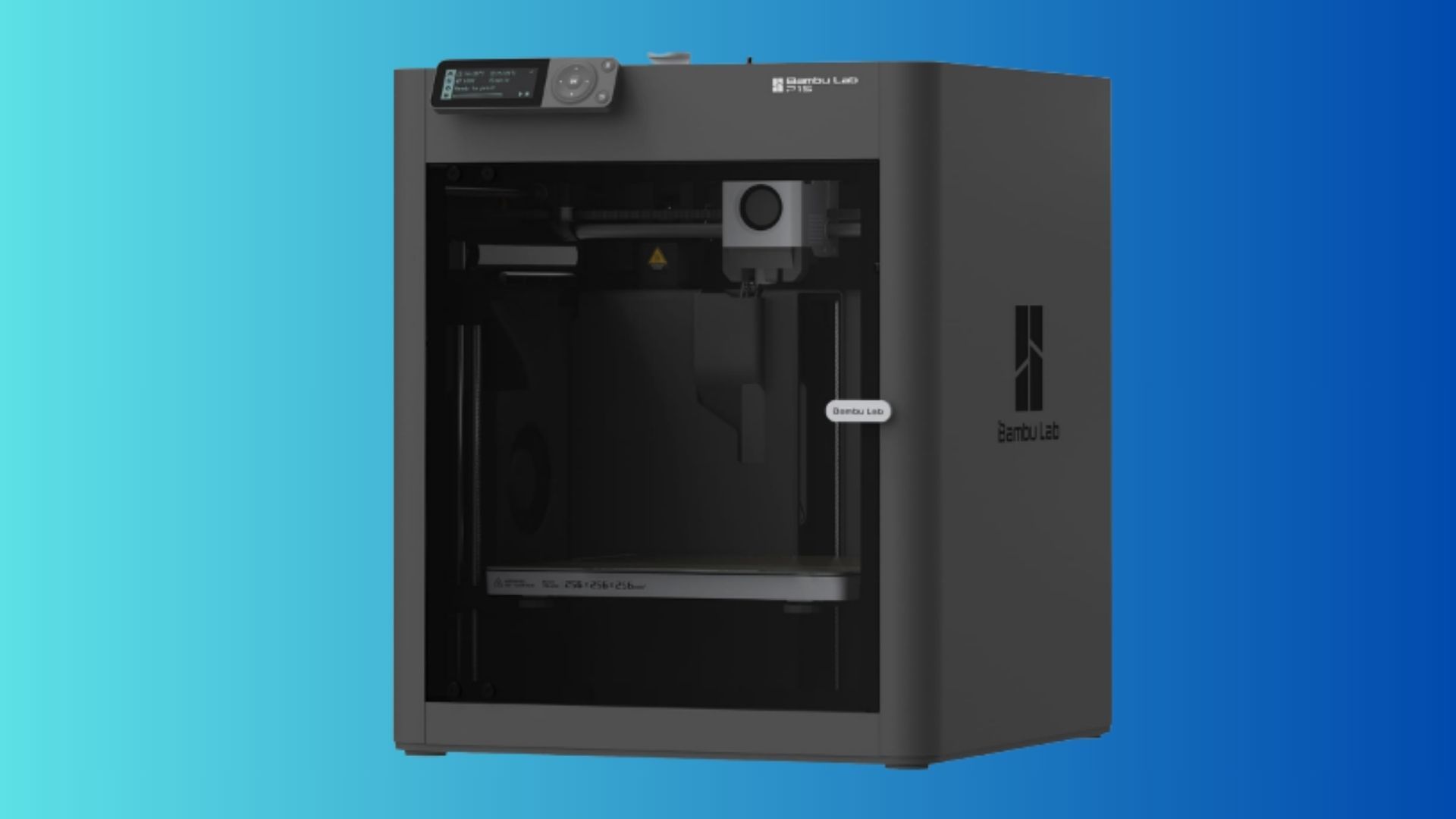
The X2D's build volume measures 256 by 256 by 260 millimeters. That is compact enough for a home studio or a desk corner, but large enough for most everyday projects. Custom storage bins, display models, replacement parts, toys, and prototype pieces all fit comfortably inside the chamber.
For multi-material setups, the X2D works with Bambu Lab's Automatic Material System. Creators can load multiple filaments through the AMS and let the printer coordinate changes between the two physical nozzles. If the plan is to connect more than two AMS units, including the newer AMS 2 Pro or AMS HT models, buyers will need the 4-in-1 PTFE adapter, model FAZ013-N, to keep the feed paths organized.
Who This Printer Is For
The X2D sits in a sweet spot between entry-level consumer machines and professional workhorses. Its dual-nozzle architecture and heated chamber let users attempt more ambitious prints without buying a separate industrial machine. Designers, small business owners, and serious hobbyists all benefit from the ability to run multi-material jobs in-house.
At the same time, Bambu Lab has kept the interface approachable. AI monitoring, automated bed leveling, and filament path diagnostics reduce the skill floor. A user who has never run a multi-material print before can learn the workflow without ruining dozens of spools along the way.
Bottom Line
The Bambu Lab X2D is not just another spec bump. The dual-nozzle system, 300-degree nozzle, 65-degree chamber, servo extruder, and AI monitoring all point to the same goal: making advanced printing workflows reliable enough for everyday use. If you have been waiting for a consumer machine that can handle multi-color models, soluble supports, and high-temperature engineering materials without a steep learning curve, the X2D is worth a close look.

Comments (0)
No comments yet. Be the first!
Leave a Comment