The X2D brings dual-nozzle printing, active chamber heating, and factory filtration for under $1,000. Is this Bambu's best value?
Four Years in the Making
Bambu Lab last updated its X series of 3D printers nearly four years ago. The X1 Carbon set a high bar when it launched, but the lineup sat untouched while the P, A, and H series got all the attention. The X2D finally changes that. It replaces the X1 Carbon, improves on it in most respects, and actually costs less.
The X2D comes in two versions: the printer only at $649, or the Combo with the AMS 2 Pro at $899. You can buy it from Bambu Lab directly, MatterHackers, or Best Buy. For a printer with an actively heated chamber, dual nozzles, and built-in filtration, that pricing puts it in an unusual spot: better value than almost anything else Bambu sells above $500.
What Makes the X2D Different From the P2S
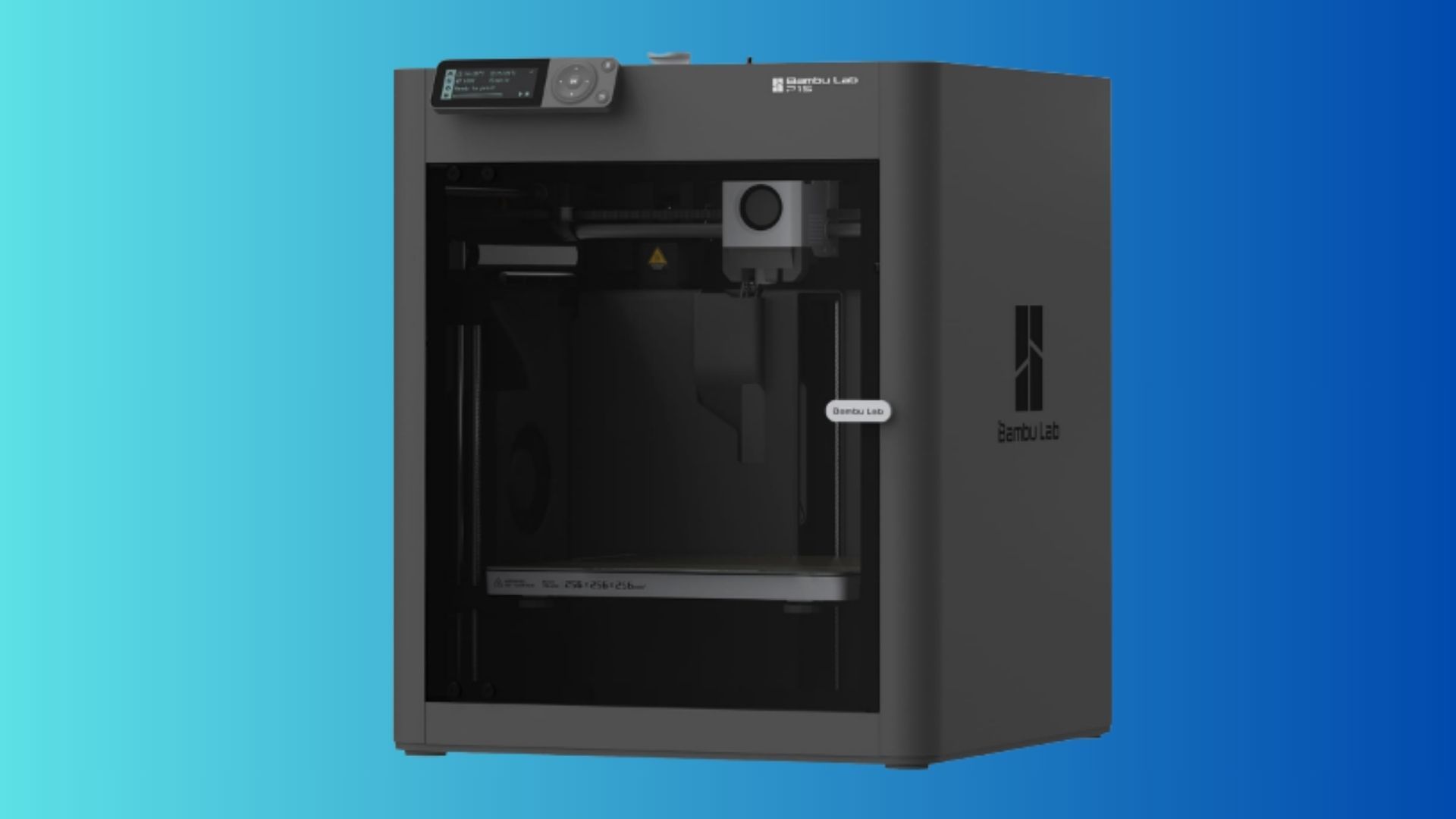
The X2D and P2S share a lot of DNA. Both use the same direct-drive PMSM servo extruder, ship with hardened steel nozzles from the factory, have a 5-inch touchscreen, reach 300C at the nozzle, and extrude at 40mm3/s. The build volume is essentially the same at 256 x 256 x 260 mm.
The differences matter if you print engineering materials. The P2S uses what Bambu calls heat management: it circulates warm air inside the chamber to keep temperature roughly stable. The X2D has a dedicated chamber heater that actively maintains 65C. That is a real upgrade for ABS, ASA, and PA-CF. The bed also gets 10C hotter, topping out at 120C instead of the P2S's 110C.
Filtration is another difference. The P2S requires you to buy a filter kit separately. The X2D ships with proper HEPA filtration from day one. If you are printing ABS or ASA in a home office, that matters.
The Dual-Nozzle Setup
The headline feature is the second nozzle, and it is the part of the X2D that needs the most explanation. The main nozzle uses a direct-drive extruder, the same setup as the P2S. The auxiliary nozzle uses a Bowden extruder, which means the motor sits back at the filament input and pushes filament through a tube to the hotend.
Bambu does not position this as a second main nozzle. It is meant for support material, and for that job it works well. When you print with PLA or PETG supports, the second nozzle can use a different filament that does not bond to your part material. That means supports pull away cleanly without the repeated purge cycles a single-nozzle printer needs to switch materials.
The Bowden design does introduce more stringing and ooze than a direct-drive setup. Multicolor prints with the auxiliary nozzle are possible, but they are not as reliable as using the AMS 2 Pro for that job. I found myself leaving the second nozzle to support duty almost exclusively, which is exactly what Bambu designed it for.
The AMS 2 Pro Is Still the Better Multicolor Tool
The X2D review unit came with the AMS 2 Pro. If you plan to do actual multicolor printing, the AMS system is still the right answer. The Bowden extruder on the auxiliary nozzle works for simple two-color jobs, but for anything complex I relied on the AMS 2 Pro. It is more consistent and produces fewer stringing artifacts.
The AMS 2 Pro also dries and stores filament, which is useful if you live in a humid climate. If you only need the second nozzle for soluble supports or easy material changes, the AMS is not strictly required, but it makes the experience noticeably smoother.
Where It Sits in the Lineup
The X2D lands at $649, which is $100 more than the P2S. Looking at the rest of the lineup, that $100 gap is consistent: it is $180 from the P1S to the P2S, $170 from the A1 to the A2L, and now $100 from the P2S to the X2D. The next jump is to the H2S, which costs $600 more than the X2D. The H2D is $1,100 more. That is two X2D printers with money left over.
The X2D undercuts what the P1S launched at by $50. It offers a heated chamber, factory filtration, and dual nozzles that the P1S never had. For someone who wants a traditional enclosed printer without paying flagship money, it is hard to find a better recommendation.
Should You Buy It
The X2D is the best printer Bambu makes for most people in the sub-$1,000 range. At $649 for the printer alone, the heated chamber and filtration alone justify the premium over the P2S for anyone who prints ABS or ASA regularly. The dual-nozzle setup is a genuine convenience for support-heavy models, even if multicolor printing still belongs to the AMS 2 Pro.
The P2S is the better buy if you only ever print PLA and PETG. Save the $100 and skip the chamber heater. But if you want the option to print engineering materials, or if support removal is the worst part of your workflow, the X2D is worth the upgrade.
On the higher end, the Flashforge Creator 5 Pro sits in a similar price bracket to the X2D Combo. The Bambu software ecosystem is far more polished than Flashforge's offering in mid-2026. Bambu Studio receives regular updates, the community is active, and the out-of-box experience is smoother. If your budget goes to $900, the X2D Combo is the easier recommendation.

Comments (0)
No comments yet. Be the first!
Leave a Comment