The Centauri 2 Combo prints fast and handles four colors well, but the enclosed Carbon 2 Combo at $379 is the better long-term buy.
The Centauri 2 Combo at a Glance
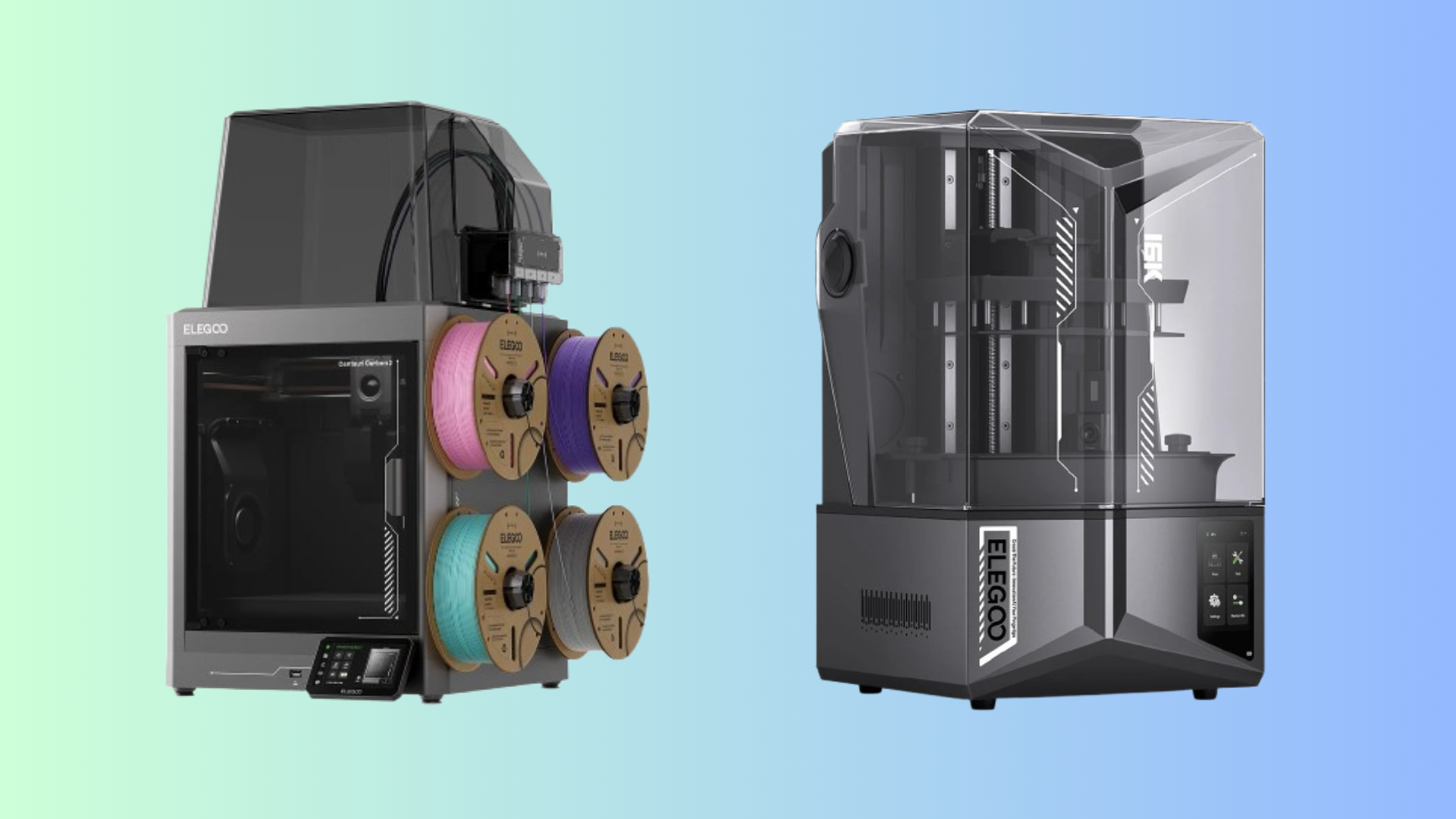
Elegoo's Centauri 2 Combo pairs a Core XY motion system with the company's four-color CANVAS feeder and a listed price of $319. That price sits in the middle of Elegoo's own lineup: the single-color Centauri Carbon starts at $309, the Centauri Carbon 2 at $329, and the enclosed Carbon 2 Combo at $379. The 60-dollar gap between the open-frame Combo and the enclosed four-color model defines this printer's buying case.
The hardware includes a 256 x 256 x 256 mm build volume, a 0.4 mm hardened steel nozzle, a maximum hot-end temperature of 350 degrees Celsius, automatic bed leveling with Z-offset calibration, and a 5-inch color touchscreen. Connectivity covers LAN, Wi-Fi, and USB flash drive. The printer uses linear rods on the X and Y axes, three lead screws for the Z axis, and a direct-drive extruder.
What You Lose Going Open Frame
Elegoo removes the enclosure, lighting, camera, and ventilation system from the Centauri Carbon 2 to reach the lower price. That trade narrows the material range. PLA and PETG printed cleanly during testing. TPU at 95A loaded through the hub without trouble, though softer grades clogged in the extruder. ASA and other temperature-sensitive materials need a stable warm chamber, and the open design cannot provide that reliably.
The 350-degree hot end can handle PET-GF and PCTG, but controlling ambient temperature matters for those materials. An open-frame printer leaves that control to the room, not the machine. Buyers planning to move beyond decorative PLA models should factor in the enclosure before choosing.
CANVAS Multicolor System
The CANVAS feeder is the strongest reason to choose this printer. It mounts on top of the toolhead, feeds four filaments, and manages color changes without cloud access. Elegoo's RFID-tagged spools let users scan a spool against the CANVAS reader and assign it to one of four slots. Third-party filament requires a manual color and material selection on the touchscreen.
The spool numbering follows the filament path into the CANVAS, which can cause confusion between slots three and four. The fourth slot sits in the upper rear position, so checking the mapping before a long multicolor print is worth doing.
Purge behavior stayed restrained during testing. A two-color bed scraper completed in one hour and 30 minutes with clean red and white layers. A four-color collapsible star printed at 0.2 mm layer height and an average speed of 120 mm per second, finishing in five hours and 13 minutes.
Print Quality and Speed
A four-color collapsible star showed clean color changes and consistent surfaces. A six-wheel antweight combat robot filled the plate with gray HT-PLA and finished without a failed first layer, taking a little over four hours at 0.2 mm layer height and 70 mm per second average speed. A set of PETG funnels printed with minor stringing across the openings; the medium funnel took two hours and 30 minutes at 90 mm per second.
PET-GF steering parts for an RC dragster printed cleanly at 350 degrees Celsius in one hour and 23 minutes, averaging 65 mm per second. The smooth cold plate caused adhesion trouble with small parts; a glue stick did not solve it alone. The textured side produced a reliable first layer after a proper cleaning.
Software and Usability
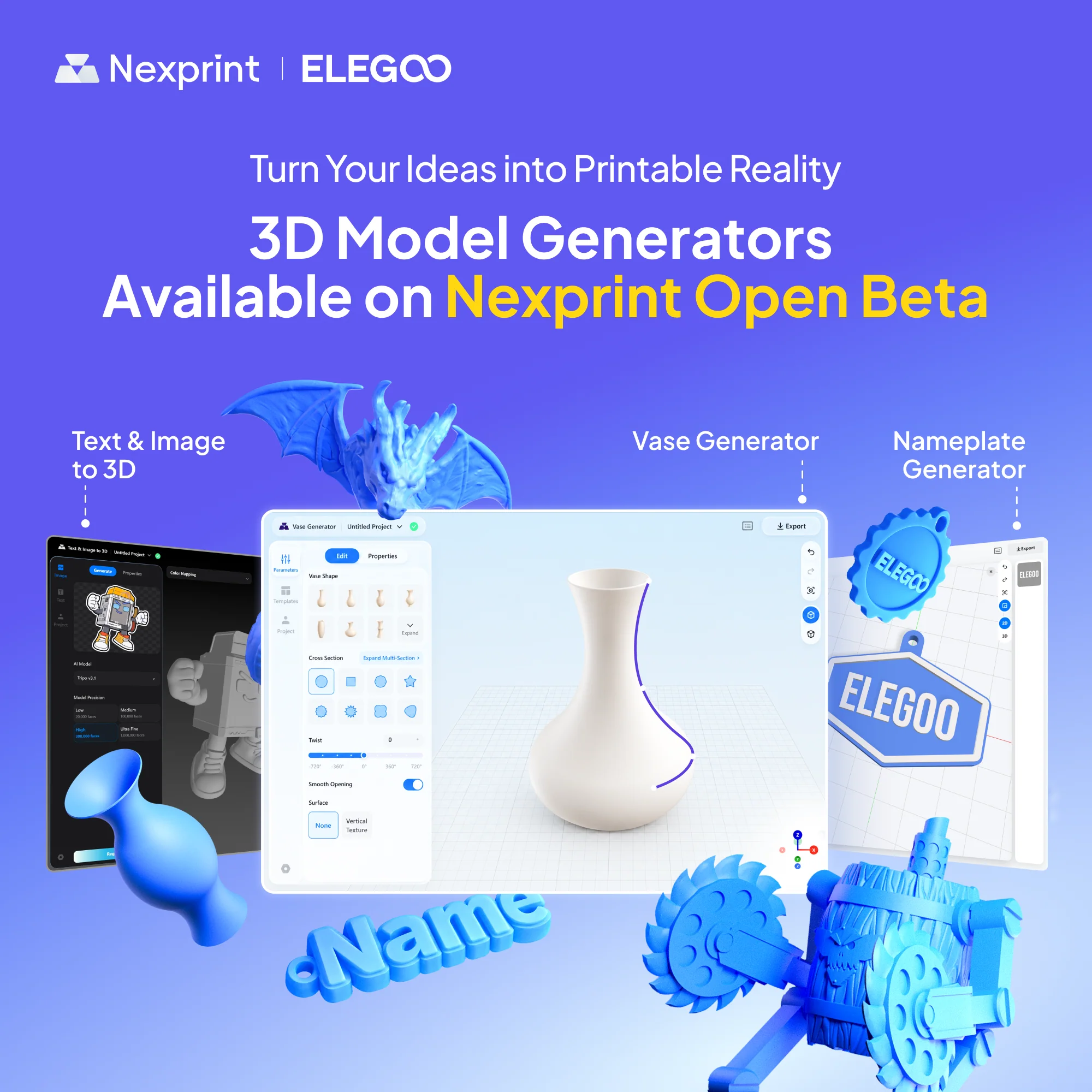
Elegoo ships ElegooSlicer, a slicer derived from OrcaSlicer and Bambu Studio. Users familiar with either will recognize the workflow. ElegooSlicer connects to Nexprint, the company's online file-sharing service. The library is smaller than MakerWorld or Printables, but the integration lets users browse models from the slicer's home screen. Cloud access remains optional throughout.
Setup requires removing three bed-retaining screws and several lead-screw stoppers. The touchscreen connects through a ribbon cable and slots into the front panel without tools. The CANVAS bracket and filament hub need M3 screws. The hub installation requires access to the toolhead wiring, which adds a step to the initial assembly.
Should You Buy It
The Centauri 2 Combo gives buyers a fast four-color Core XY printer for $319. Its print quality, touchscreen, and CANVAS feeder make it a strong fit for colorful PLA models, decorative pieces, household gadgets, and selected PETG or firm TPU jobs.
The enclosed Centauri Carbon 2 Combo costs 60 dollars more and adds a camera, lighting, enclosure, and ventilation. Those features expand the material range to include ASA and other technical filaments. A buyer who plans to stay with PLA and PETG will not miss them. A buyer who expects to grow into functional parts will wish they had spent the extra money upfront.
Elegoo's broader lineup makes the decision tighter. The Carbon 2 sits only 10 dollars above the Centauri 2 Combo, and the enclosed four-color model at 379 dollars is a clearer long-term play. Choose the open-frame Combo if budget is the constraint today. Choose the enclosed model if you expect to push into materials beyond PLA.
Comments (0)
No comments yet. Be the first!
Leave a Comment