Elegoo stripped down the Centauri Carbon 2 into a $319 four-color Core XY printer. The print quality holds up. The compromises do not.
The Centauri 2 Combo Cuts Features, Not Performance
The Elegoo Centauri 2 Combo is the most affordable four-color Core XY printer on the market right now. At $319, it undercuts every comparable machine by a meaningful margin. The question is whether what was removed to reach that price was essential or optional.
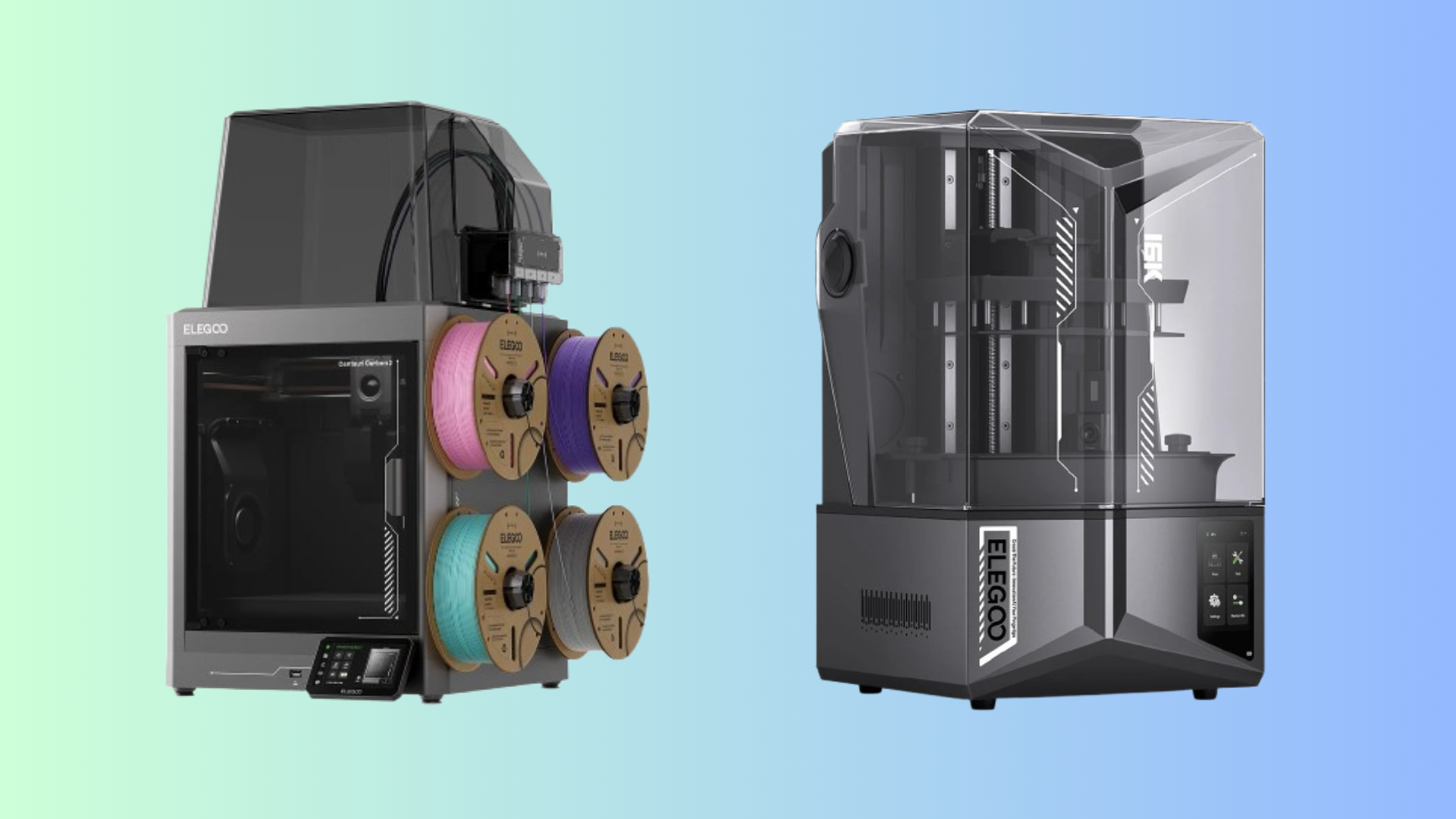
The Combo is a stripped-down version of the Centauri Carbon 2, which costs $329 on its own. That pricing is the first puzzle: the single-color Carbon is $309, and the four-color Carbon 2 Combo is $379. The Centauri 2 Combo at $319 sits in the middle, offering the CANVAS four-color system without the enclosure, camera, or lighting that come with the Carbon 2 models. Elegoo's lineup requires close reading of the spec sheet to understand what you are actually getting at each price point.
What You Get
The hardware underneath is capable. The Centauri 2 Combo uses a direct-drive extruder with a hardened steel nozzle that reaches 350°C, paired with a 110°C heated bed. The build volume is 256 x 256 x 256 mm, which is adequate for most household and hobby projects. The CANVAS four-color system is the same one found on the more expensive Carbon 2 Combo: it works well, switching between filaments cleanly and producing multi-color prints that look professional without extensive post-processing.
Print quality on standard materials is strong. PLA, PETG, and TPU up to 95A all produced clean results during testing, with good dimensional accuracy and minimal stringing when profiles are tuned correctly. The five-inch colour touchscreen interface is responsive, and the printer does not require a cloud account to operate, which is a legitimate privacy advantage over some competitors.
What You Lose
The most noticeable omission is the enclosure. The Centauri 2 Combo is an open-frame machine. That is fine for PLA and PETG, which are forgiving materials. It becomes a real constraint when you move to ABS, ASA, Nylon, or PC. These materials need a stable ambient temperature to prevent warping and layer separation, and the open frame provides no protection from drafts or temperature fluctuations. If you think you might want to experiment with engineering materials, the missing enclosure is not a minor sacrifice.
The camera is gone too, which removes the ability to monitor prints remotely or generate time-lapse videos. The integrated lighting that illuminates the print area is absent, which makes visual inspection harder, particularly when checking layer adhesion or surface quality on dark filaments. The ventilation system that handles VOCs and odour during materials like ABS is also missing, which matters more for users printing in living spaces without dedicated ventilation.
The spool holder design is another practical issue. The holders mounted to the printer body work poorly with many common filament spools. Spools that are nominally the same size do not seat properly, leading to uneven feed and, in some cases, the spool slipping off the mount mid-print. Replacing the holders with a third-party solution is a common first modification for this machine.
The build plate coating also requires attention. The PEI surface is less adhesive than the surfaces found on some competing printers, particularly with PETG, which can stick too aggressively and damage the coating when removed. A glue stick or PEI replacement sheet is a sensible accessory purchase alongside this printer.
Who This Printer Is For
The Centauri 2 Combo makes sense for a specific buyer: someone who primarily prints decorative items, toys, and gadgets in PLA and PETG, who wants multi-color capability without spending four or five hundred dollars, and who does not plan to push into engineering materials. Within that use case, the Centauri 2 Combo delivers. The print quality is genuine, the CANVAS system is reliable, and the price is hard to argue with.
The problem is the upgrade path. For $60 more, the Centauri Carbon 2 Combo adds the enclosure, camera, lighting, and ventilation that the open-frame Combo lacks. For $10 more than that, you can get the fully enclosed single-color Centauri Carbon, which remains one of the best budget 3D printers available regardless of color capability. At $319, the Centauri 2 Combo is a bargain. At $379, the Carbon 2 Combo is a better printer for only slightly more money, and the value gap is hard to ignore once you understand what the enclosure adds for anyone printing beyond basic PLA.
The Centauri 2 Combo is a good printer held back by Elegoo's own product matrix. The company has built a genuinely competitive multi-color system in the CANVAS platform, and it knows how to price aggressively. But the feature gap between the Combo and the Carbon 2 is large enough that most buyers should think carefully about whether the $60 saving is worth it over the life of the machine.
Comments (0)
No comments yet. Be the first!
Leave a Comment