UC Berkeley has released OpenCAL, a DIY volumetric 3D printer built with Prusa Research and Formlabs. It prints a Rodin's Thinker replica in 90 seconds with no layers or support structures, using resin sold by Prusa.
Layer-free printing goes open source
UC Berkeley, in partnership with Prusa Research and Formlabs, has released OpenCAL, a do-it-yourself volumetric 3D printer based on Computed Axial Lithography (CAL). The process was originally developed by Professor Hayden Taylor and Lawrence Livermore National Laboratory scientists, and was previously tested in space. In OpenCAL, a resin vial rotates while a projector illuminates it from the outside, forming the entire part at once rather than layer by layer.
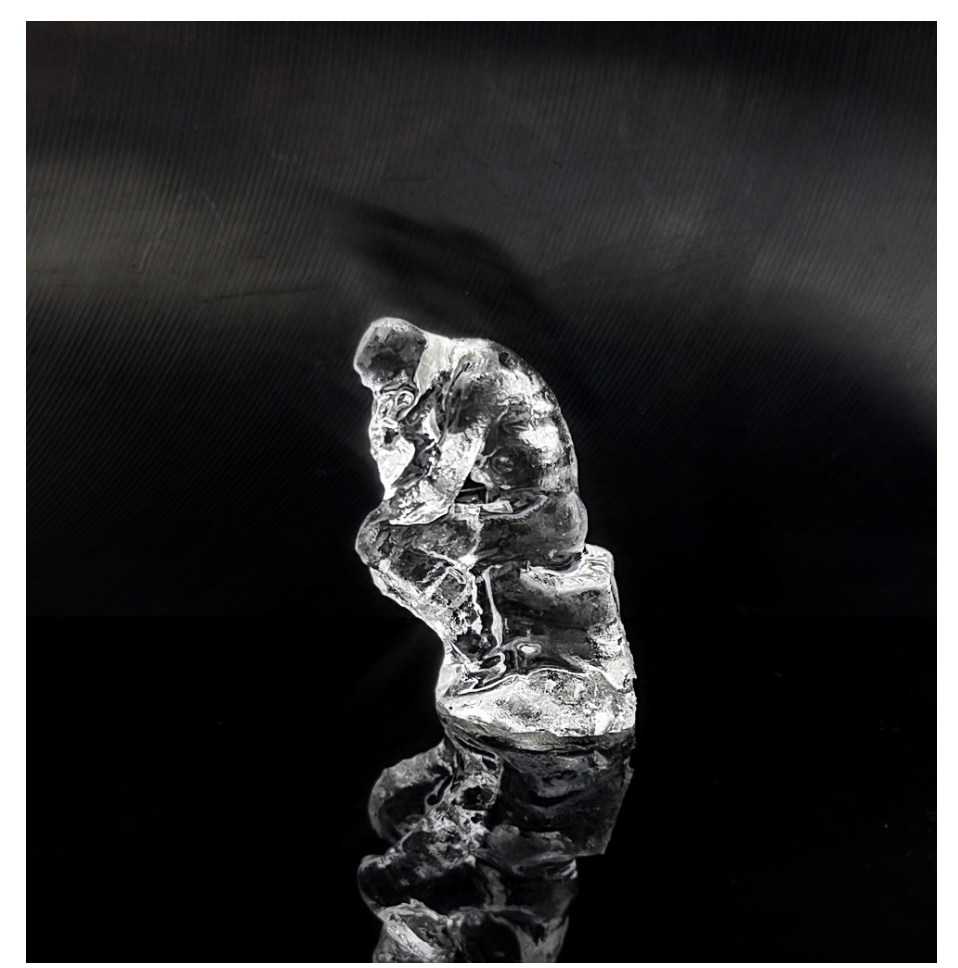
A Rodin's Thinker replica was printed in 90 seconds with no layers or support structures. Image courtesy of OpenCAL / UC Berkeley.
What it costs to build
The parts needed to build an OpenCAL printer cost around $1,600, and the machine can reportedly be assembled in about six hours. Some components are 3D printed, while others can be ordered from the Prusa store. At its heart sits a regular consumer projector, a Raspberry Pi 5, and a frame. The resin is $119.99 per 1 L bottle, and Formlabs produces the resin, which Prusa sells. All CAD files are available on Printables.
Who is using it
Printers are already running at MIT, the National Institute of Standards and Technology (NIST), and Purdue University. The team will host a workshop in February as part of the volumetric manufacturing symposium. The project is released under Prusa's Open Community License, so anyone can build, improve, and share the design.



Comments (0)
No comments yet. Be the first!
Leave a Comment