We pit the Sovol M1D against the Elegoo Centauri 2 to find which multicolor 3D printer delivers better value, print quality, and ease of use in 2026.
The contenders
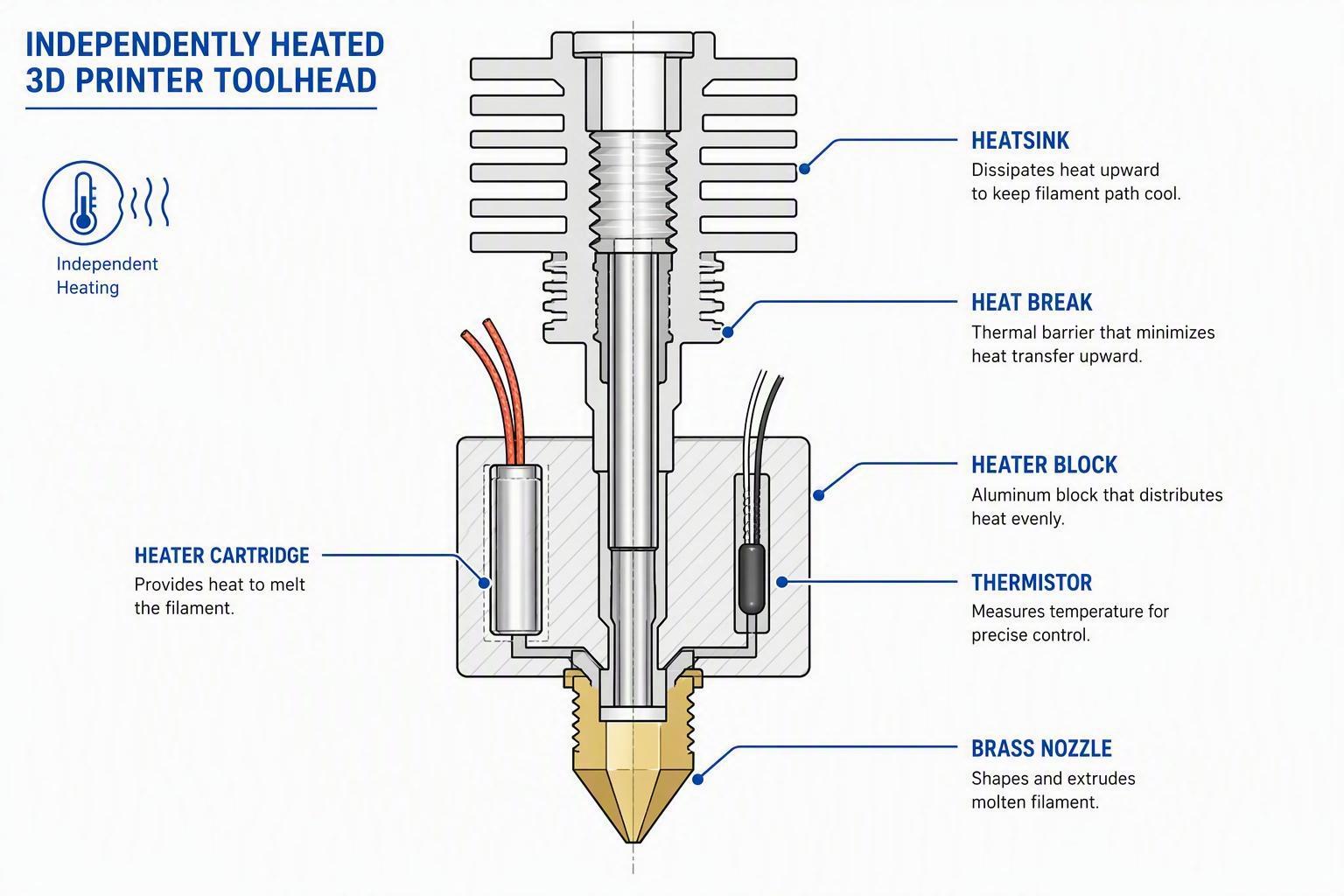
The Sovol M1D and Elegoo Centauri 2 sit in the same price bracket and both target makers who want multicolor or multi-material output without a five-figure budget. They get there through different architectures. The M1D uses an IDEX tool-changing system with two independently heated extruders. The Centauri 2 uses a single CoreXY motion system with a four-color direct extruder setup. Those differences show up in speed, calibration complexity, and the kinds of prints each printer handles best.
Build volume and speed
The M1D offers a 300 x 300 x 300 mm build volume and can print at up to 500 mm/s in certain modes. The Centauri 2 lands at 250 x 250 x 250 mm and also tops out around 500 mm/s. In practice the M1D has more room for large single-color parts, while the Centauri 2 is tighter but better suited to smaller desk spaces. Both printers include auto bed leveling and vibration compensation, so speed claims are closer to real-world performance than older machines.
Multicolor workflow
The M1D tool-changer swaps extruders during a print. That means each toolhead can have a different nozzle size or material type, which is useful for soluble supports or combining PLA with PETG. The tradeoff is swap time: every toolchange adds a few seconds of delay. The Centauri 2 uses a single extruder with four filaments feeding into a mixing chamber. Color changes happen faster because there is no mechanical swap, but you lose the ability to run truly different materials at the same time.
For a maker printing mostly colorful figurines and household parts, the Centauri 2 workflow is simpler. For a user running production parts with soluble supports or flexible materials alongside rigid ones, the M1D is more capable.
Software and ecosystem
Elegoo bundles the Centauri 2 with its own slicer and a cloud-based model library. The slicer handles color assignment through a visual interface that is easy for beginners. Sovol relies on standard Bambu Studio and Orca Slicer profiles, which gives advanced users more control but requires more setup. The Centauri 2 wins on out-of-box simplicity. The M1D wins on long-term flexibility.
Price and value
At launch the Centauri 2 undercuts the M1D by a small margin and includes the multi-color filament system in the base package. The M1D base kit does not include the second toolhead, so the true all-in cost is higher if you want full IDEX capability. Buyers should compare final configured prices, not just the headline number.
Which one to buy
Choose the Elegoo Centauri 2 if you want the simplest path to multicolor printing and plan to stick with standard PLA, PETG, and TPU. Choose the Sovol M1D if you want tool-changing flexibility, larger build volume, or the option to run different nozzle sizes and material types on the same print. Neither printer is a clear winner across every metric, but each is the better choice for a specific type of user.
Comments (0)
No comments yet. Be the first!
Leave a Comment