MIT motors for 50 cents, Colorado joins the regulation push, and Wigglitz takes Toy of the Year — your Monday briefing.
MIT Prints Working Motors for 50 Cents
MIT researchers have built a multimaterial 3D printer capable of outputting fully functional linear motors in a single process. The only post-processing step required: magnetization. At approximately 50 cents per motor, this could fundamentally change how we think about distributed manufacturing of electromagnetic components.
The system prints both conductive coils and magnetic structures simultaneously, eliminating assembly steps that traditionally make motor manufacturing complex and expensive.
Colorado Becomes Fourth State to Propose 3D Printer Restrictions
Colorado HB26-1144 would require 3D printers in the state to include surveillance capabilities to prevent manufacturing of firearm components. The bill joins similar legislation proposed in New York, Washington, and California.
The hobby community continues to push back, citing First Amendment concerns around code-as-speech and the practical impossibility of enforcing such restrictions on existing hardware.
Wigglitz Wins Toy of the Year
In what might be the biggest validation of 3D printing as a manufacturing technology yet, Wigglitz — a fidget toy produced on a 3,000+ Bambu Lab printer farm — won the 2026 Toy of the Year award. The company generated $18 million in revenue and shipped 1.5 million units in a single month.
This proves that print farms can compete with injection molding at scale, at least for certain product categories.
DISH 3D Printing Achieves 0.6-Second Volumetric Prints
Tsinghua University researchers demonstrated volumetric 3D printing that produces millimeter-scale objects in just 0.6 seconds while maintaining 12μm resolution. The DISH (Diffusion-Inhibited Scanning Holography) process eliminates the traditional speed-precision tradeoff.
Venom Aircraft Flies After 71-Day Development
Divergent Technologies and Mach Industries built and flew a combat-capable autonomous aircraft in just 71 days using 3D printed monolithic structures. The rapid development cycle demonstrates how additive manufacturing compresses aerospace timelines from years to months.
Materialise Adds PEEK to CMF Portfolio
Surgeons now have a new option for cranio-maxillofacial reconstruction: PEEK implants via Materialise. The polymer alternative to titanium offers different mechanical properties and may be preferred for certain patient cases.
Update: Afternoon Stories
Freeform Raises $67M for AI-Driven Metal AM
California-based Freeform closed a $67 million Series B led by Founders Fund, with NVIDIA's NVentures participating. The funding accelerates Skyfall, a "Physical AI" platform promising 25x faster metal 3D printing through real-time laser control. Total funding now exceeds $120M.
Hexagon HYPERSCAN Ditches Reference Targets
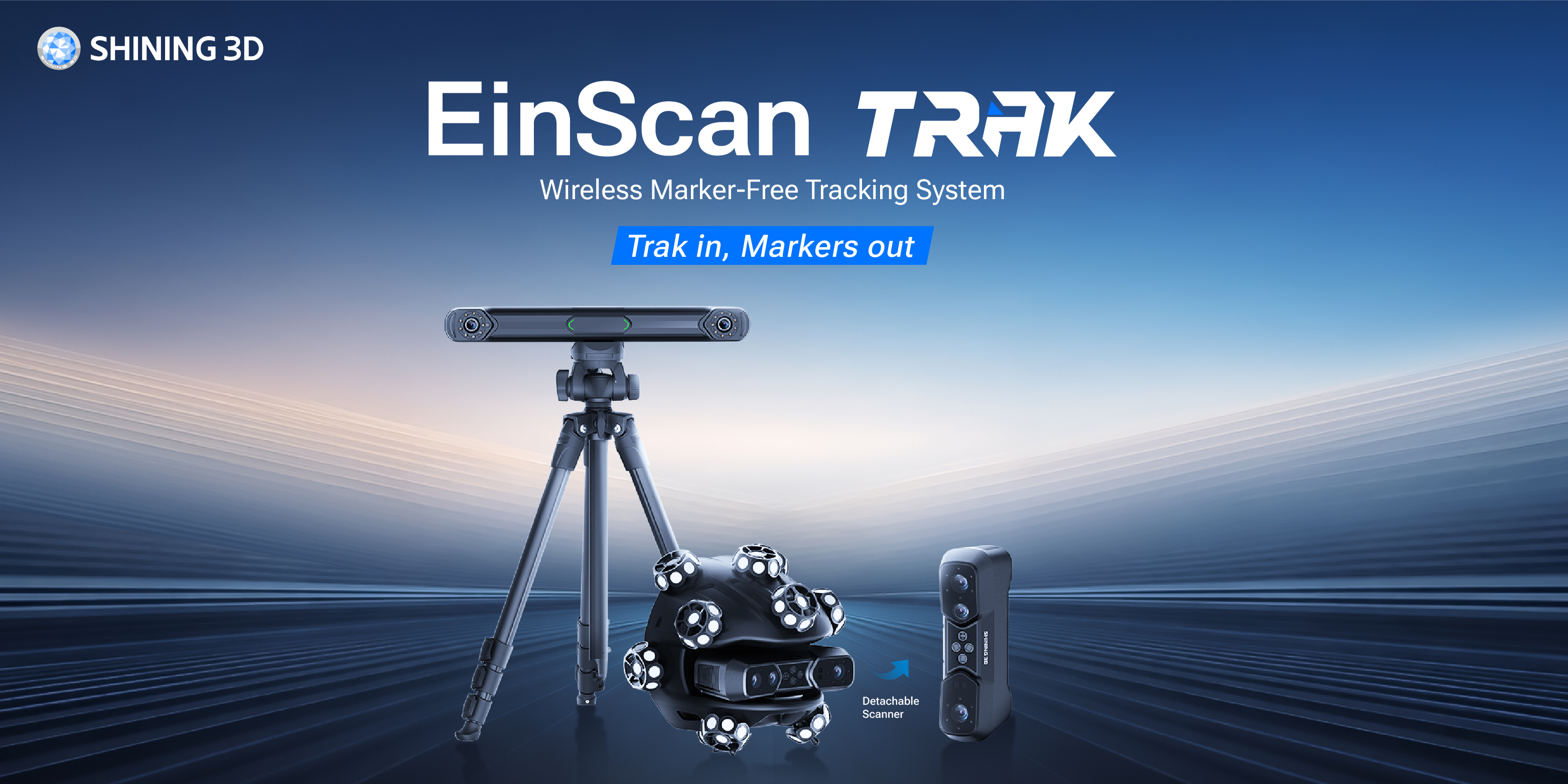
Hexagon launched HYPERSCAN, a portable 3D scanner that eliminates the 15-30 minutes typically spent placing reference targets. Using optical tracking instead of sticky dots, it's certified to VDI/VDE 2634-3 and can scan objects up to 7 metres — built for factory floors, not labs.
Recycled Nickel Powder Cuts Carbon by 99%
An Oregon State LCA found Continuum Powders' recycled nickel production reduces global warming potential by up to 98.7% compared to virgin material. For aerospace and defense AM, this addresses both sustainability and supply chain vulnerability in one stroke.
Quick Links
- Stratasys Dental Training: Multi-material anatomical models for dental schools, replacing cadavers
- Proximal Sound Printing: Ultrasound-based 3D printing creates microstructures on silicone
- Telemeter Radar Filament: PLA-based filament absorbs 76-81 GHz for automotive sensor testing

Comments (0)
No comments yet. Be the first!
Leave a Comment